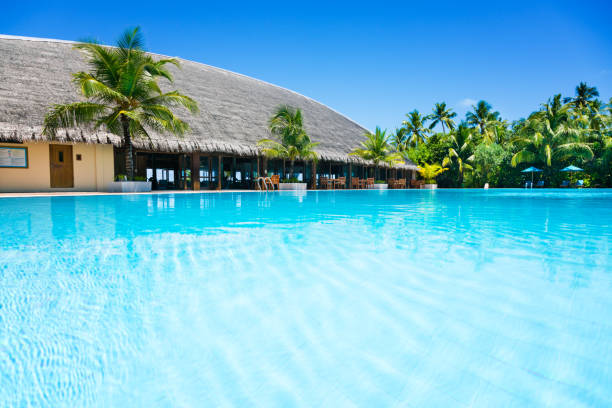

I’ve asked myself this question more times than I want to admit, usually while staring at two tabs open. One is a “luxury” resort with a price that makes my bank app feel judgmental. The other is a decent-looking hotel that promises “comfort” and free Wi-Fi, which honestly used to be enough for me. Somewhere between those two tabs is the real question. What exactly are you paying extra for, and when does it actually make sense?
Because yeah, sometimes it does. And sometimes it’s just a fancy towel folded into a swan, judging you silently.
The feeling starts before you even check in
This might sound fake-deep, but hear me out. A good resort starts working on you before you arrive. The emails feel human, not copy-paste. The website doesn’t scream SALE SALE BOOK NOW like a desperate influencer. There’s a calm confidence to it.
I once booked a resort mostly because their Instagram comments were full of real people saying things like “still thinking about that breakfast” or “came for 3 days, stayed for 6.” That kind of social proof hits different than ads. You don’t see that with cheaper places as often. Online chatter matters more than people admit.
Also, the arrival matters. Not the red carpet nonsense, but the smoothness. No awkward waiting, no staff looking confused about your booking. When check-in feels like sliding butter on toast, you already start justifying the price in your head.
Space you actually want to stay in
Here’s a small confession. On normal trips, I barely spend time in the room. Sleep, shower, leave. Resorts flip that behavior. You stay in the room more, and somehow that’s the point.
The extra money usually buys you space that doesn’t feel like a box. Natural light, balconies you actually sit on, bathrooms that don’t make you elbow the wall. This stuff sounds boring until you’re stuck in a tiny room working remotely, questioning your life choices.
There’s also a weird psychological thing. When a place is designed well, you slow down. You’re not rushing out because the room is depressing. That’s value, even if it’s hard to put into numbers.
Food that doesn’t feel like an afterthought
This is where I’ve been burned before. Expensive resort, mediocre food. That hurts more than bad food at a cheap place. Expectations matter.
The resorts worth the extra money treat food like part of the experience, not just a service. Menus change. Ingredients are local. Sometimes the chef actually talks to guests, which feels oddly comforting. Like okay, a real human made this pasta.
A lesser-known fact most people miss is that many higher-end resorts run their kitchens at much lower margins than city restaurants. They do it for reputation, not profit. That’s why you’ll sometimes find surprisingly good meals included, while standalone restaurants charge triple.
And no, I’m not saying every meal has to be fancy. But if I’m paying extra, I don’t want food that tastes like it came from a hotel conference buffet.
Service that feels natural, not robotic
You can tell when staff are trained to follow a script versus trained to read people. The good resorts invest heavily in the second kind.
There’s a difference between someone asking “Is everything okay sir?” every 10 minutes and someone noticing you prefer coffee before breakfast without asking. That kind of service feels invisible until you go somewhere without it.
Financially speaking, this is where a lot of your money goes. Staffing costs. Training. Retention. It’s not glamorous, but it’s expensive. Resorts with high staff turnover almost never feel worth the price, no matter how pretty they look on Booking.com.
Experiences you don’t need to plan
I used to think resort activities were cheesy. Yoga at sunrise, guided walks, cultural nights. I was wrong. Or maybe I just got tired.
The real luxury is not planning. When experiences are built in and optional, it removes decision fatigue. You join if you feel like it, skip if you don’t. That freedom is underrated.
Some resorts even design experiences around local life instead of tourist clichés. Those are gold. They give you stories to tell, not just photos.
Privacy and quiet, which is harder to buy than you think
This one hits harder as you get older, or maybe just more tired. Quiet is expensive. Real quiet.
Good resorts manage crowd flow in subtle ways. Layout, timing, space between rooms. You’re not constantly hearing someone else’s vacation through the walls. That’s intentional design, and it costs money.
There’s also privacy from staff. They’re there, but not hovering. You feel left alone in a good way.
When it’s actually not worth it
Let me be honest, because pretending every luxury is justified is dumb. If you’re the kind of traveler who wakes up early, explores all day, eats outside, and just needs a bed, resorts are often overkill.
Also, short stays. One night at a resort rarely makes sense unless it’s a stopover or special occasion. The value shows up when you slow down.
And some resorts are just expensive because they can be. Location, name, hype. No soul. Those are the ones people complain about online, and you’ll see it if you read enough comments instead of just looking at photos.
So yeah, what are you really paying for
You’re paying for fewer decisions, better sleep, smoother days, and small moments that stack up. Not luxury in the flashy sense, but comfort that sticks with you after the trip ends.
I still compare prices. I still hesitate before booking. But when I do choose the resort, it’s usually because I want the trip to feel like a break, not a project.
And honestly, sometimes peace of mind is the most expensive line item, even if it’s not written anywhere.